जानिये क्यों ज़रूरी हैं वक़्त के साथ पैसे के बदलती वैल्यू और कम्पाउंडिंग को समझना

अच्छा दोस्तों आप को अगर कोई आज २० हज़ार दे या फिर २० हज़ार आपको एक साल बाद दे तो आप कब लेना पसंद करेंगे? क्या आप भी आज २०हज़ार रुपए लेना पसंद करेंगे? सिर्फ आप नहीं, ज़्यादातर लोग आज ही मांगेंगे| लेकिन क्यों? क्या आप जानते हैं के ऎसा क्यों है?

इस सवाल का जवाब समझने के लिए ज़रूरी है के हम टाइम वैल्यू ऑफ़ मनी को समझे | दोस्तों फाइनेंस के प्रोफेसरों के हिसाब से फाइनेंस की सब से महत्वपूर्ण बात समय के साथ बदलती पैसे की वैल्यू को समझना| लेकिन  इस कांसेप्ट को समझने के लिए आपका फाइनेंस का स्टूडेंट होना जरुरी नहीं है| जी हाँ, आपने सही सुना|

क्या है पैसे की टाइम वैल्यू

आपने अपने पैसो को कई बार अलग अलग जगह निवेश किया  होगा और निवेश किये रकम पे आपको कुछ ब्याज या इंटरेस्ट मिला होगा| इसका मतलब साफ़ अक्षरों मे  यही हुआ के – पैसा निवेश करने से पहले आपके पास जो राशि थी वह निवेश ख़त्म होने पर उससे ज़्यादा हैं |

एक सरल उदहारण के साथ आपको समझाते हैं – अगर  आप १०० रुपए ७ प्रतिषत दर से एक साल  के लिए फिक्स्ड डिपाजिट पालिसी में निवेश करते हैं, तो एक साल बाद आपको मिलने वाली राशि १०७ रुपए होगी|

कुल राशि = मूल राशि + ब्याज़ = १०० + ७ = १०७ होगी।

यदि आप इसी राशि को एक साल के बजाए दो साल के लिए निवेश करदे तो दो वर्ष के पश्चात् आपको ११४ रुपए मिलेगी|

कुल राशि = मूल राशि + ब्याज़ = १०० + १४  = ११४  होगी।

तो इसका मतलब यही हुआ के जितने ज़्यादा वक़्त के लिए हम राशि निवेश करेंगे तो उतना  ही ज़्यादा बढ़ेगा हमारा पैसा | मतलब, जितने ज़्यादा वक़्त के लिए  पैसा  निवेश किया जायेगा, उतना ही उसका मूल्य बढ़ेगा|

लेकिन इस पल पल रंग बदलती दुनिया में क्या आज के पैसा का  मूल्य कल के पैसों से ज़्यादा है? जी हाँ दोस्तों पैसो का  मूल्य  समय पे भी निर्भर है| निवेश किये गए पैसो पर समय का मूल्य शामिल होता हैं | इसी को टाइम वैल्यू ऑफ़ मनी कहा जाता हैं |

इसे कैलकुलेट करना आसान हैं| यह मानते हुए के आप फाइनेंस के छात्र नहीं हैं, बिना फोरमुआला और कैलकुलेशन का सहारा लिए – आपको समझादे – अगर आप कही भी (बैंक याम्यूच्यूअल फण्ड) पैसा निवेश करते हैं कुछ वर्ष के लिए| पालिसी टर्म ख़त्म हनी के पश्चात् आप को बढ़ी हुई राशि मिलेगी, उसमें आपको बढ़ती महंगाई  का ध्यान रखना पढ़ेगा|

अपने बैंकर से ज़रूर समझले के बढ़ी हुई राशि जो टर्म पूरा होने पे मिलेगा उसकी सही वैल्यू क्या है|

टाइम वैल्यू ऑफ़ मनी कीजानकारी उन लोगों के लिएज़रूरी है जो शेयर बाज़ार या म्यूच्यूअल फण्ड में पैसा लगाते हैं|

अब आपको जवाब मिलगया होगा की अगर हमें चॉइस मिले के आज २० हज़ार रुपए ले लो या फिर एक साल बाद लो तो आज लेना सही होगा|

और अब तो आपको यह सवाल का जवाब भी मिल गया होगा की हमें अगर आज 20 हजार रुपए दे या फिर 1 साल बाद 20 हजार दे तो  क्यों हम आज ही 20 हजार रुपए लेंगे।

कम्पाउंडिंग क्या हैं और क्यों ज़रूरी हैं आप के लिए

दोस्तों अगर मैं आप को यह बोलू के दस लाख रुपए तीस सालों में दस करोड़ बन सकता हैं तो क्या आप मेरा विस्वाश करेंगे?

तो मैं आपको बता दूँ के यह मुमकिन हैं| इसे समझने के लिए आपको एकाउंट्स पढ़ने की जरुरत नहीं हैं| कक्षा १० में पढ़ी कंपाउंड इंटरेस्ट की समझ काफी हैं| यदि आप दस हज़ार रुपए ३६ परसेंट वार्षिक चक्रवृद्धि ब्याज यानि कंपाउंड इंटरस्ट में लगा दें तो यह मुमकिन हैं|

जैसाकि आप जानते हैं चक्रवृद्धि ब्याज में हर साल मिलने वाले ब्याज को पिछले राशि में मिला दिया जाता हैं, तो दस हज़ार रुपए को अगर इस तरह निवेश करे की ब्याज ३० साल तक लगातार  पिछले राशि में जोड़ दिया जाए, जो अगले वर्ष इंटरेस्ट निकालते वक़्त मूलराशि बनजाये तो सिर्फ ३० साल में दस हज़ार,  दस करोड़ बनजाए|

आप पूछ सकते है की कम्पाउंडिंग की आम ज़िन्दगी में क्या ज़रूरत हैं? तो भाई, जब अल्बर्टआइंस्टीन इसे दुनिया का आठवा अजूबा कह गए है तो आप समझले के यह कितना महत्वपूर्ण हैं आपकी धनवृद्धि में| कम्पाउंडिंग कीजानकारी , उनलोगो के लिएआवश्यक शेयर बाजार और म्यूच्यूअल फंड्स में लगाना चाहते है|

यह एक शानदार तरीका है पैसा बढ़ाने का, लेकिन आप में धैर्य होना ज़रूरी है| क्योंकी यहाँ आपको कमसेकम १०वर्षो के लिए पैसा निवेश करना पड़ेगा | एक्सपर्ट्स का यही मंत्र  है के अगर आप पैसा १० वर्ष के लिए शेयर मार्किट में नहीं लगा  सकते  है तो सोचिये भी म्यूच्यूअल फंड्स, सिप या शेयर मार्किट में निवेश करने के लिए |  

आपको कम्पाउंडिंग का लुत्फ़ उठाने के लिए उस चीनी किसान तरह होना पढ़ेगा जो चीनी बम्बू का फसल लगा ते है| वे चार चार साल  तक ज़मीन में बोते बम्बू  के बीज का लालण-पालण करते है  के पाँचवीं  वर्ष में उन्हे एक बेहतरीन फसल मिले|

डिस्क्लेमर : म्यूच्यूअल फंड निवेस बाज़ार के जोखमों  के अधीन है | निवेश करने से पहले पड़ताल करले और अपने फाइनेंसियल अद्विसेर से सलाह लेकर निवेश करें |


Retail investors are….. “NOISE”

N- Narrow attitude :

Majority of retail investors play for narrow price movements. Not being long term investors, they hardly benefit from the primary long term trend.

O- Opportunity Givers :

Often they buy and sell at wrong times. These kinds of investors give opportunity to genuine investors to pick good quality stocks at dirt cheap prices and sell at peaks.

I – Irrational:

They act irrationally. They move with the micro trends without any logic.

S – Short term view :

Investment horizons are very short and they often make silly mistakes.

E – Emotional:

They are very emotional . Greed and fear often eradicate their gains.

NOISE which is attributed to emotions will always remain alive. From time immemorial, the human being has remained emotional.

In one important respect we have made practically no progress at all, and that is in human nature.” – Benjamin Graham

Though NOISE makes much harder efforts than Trend, the latter wins, always! Because those who follow long term trend , appreciate very well that NOISE can be heard when we are quiet.

The quieter you become, the more you can hear.” – Ram Dass

Why term insurance is a must in financial planning ?

The Covid-19 pandemic has brought in sharp focus the need for a good financial plan which can secure the family from risks to both lives as well as livelihoods. Every investor has to remember that even the soundest financial plan requires the strong foundation of a term insurance plan. A term plan makes a payout only on the policyholder’s death. There is no savings component in it. So, how does it help?

Income replacement

To better understand how term insurance plans, work and act as income replacement, let us take an example of a married couple Sanjay, a 30-year-old entrepreneur , and his wife Salini , 28-years-old and a homemaker. The astute planner that Sanjay was, he had taken a term insurance plan and named Salini as the beneficiary.

Unfortunately, Sanjay had an untimely demise. Though in great distress, Salini didn’t have to worry about the loss of a regular income as the claim proceeds from the term insurance plan came to her rescue. Since Sanjay had taken adequate life cover Salini had the necessary financial resources to continue with her life as well as the financial savings plan.

Life cover

So, how much life cover is adequate? Here one should apply the concept of Human Life Value (HLV). As per this, individuals up to the age of 40 years need a life cover equivalent to 20-30 times their annual income. For individuals in the age bracket of 40-50 years, a life cover of 10-15 times annual income is recommended and for individuals above 50 years the life cover should ideally be five times the annual income.

Ideally, the life cover should continue till retirement at least. Individuals should assess the family’s lifestyle, responsibilities such as children’s education, retired parents, etc., outstanding financial liabilities such as a home or personal loan, and ensure the life cover is sufficient to cover all these in case of any untoward incident. At the time of purchase the life insurance company may require customers to undergo medical tests; this is done to arrive at the appropriate premium to be charged.

There have been several innovations in term plans. Today customers can purchase term insurance plans with built-in critical illness benefits. This benefit is particularly important as lifestyle related ailments are on the rise due to increased levels of stress, leading a sedentary life, lack of proper dietary habits, etc.

If you seek further assistance in selecting Term Plan, then get in touch with us at Pramada Advisory know more.

जानिए पर्सनल फाइनेंस प्लान करने का आसान तरीका–

दोस्तों फाइनेंस, पैसा, धन किसी भी व्यक्ति के जीवन का महत्वपूर्ण हिस्सा होता है । फाइनेंशियल प्लानिंग हर एक व्यक्ति के लिए ज़रूरी होती है। चाहे वह किसी भी उम्र का हो, यदि वह कमाता है, तो ज़रूरी है के वह अपनी कमाई सही तरह से इस्तेमाल करे। जैसे खाना ज़रूरी है ज़िन्दगी के लिए, वैसे ही धन का सही तरह से इस्तेमाल और बचत करना ज़रूरी है एक आरामदेह जीवन के लिए ।अपना धन आप कैसे इस्तेमाल करेंगे उसकी प्लानिंग करने के लिए आप को एकाउंट्स आती हो, ज़रूरी नहीं है| फाइनेंस या आपकी पैसे से जुड़ी हर गति विधि, जैसे पैसा इन्वेस्ट करना या पैसा उधार लेना, या किसी को पैसा उधार देना, इन सब का एक प्लान होना ज़रूरी है, जिसे आप मंथली बजट कह सकते है। आप मानें या न मानें, यह बजट का होना आप के लिए अतिरिक्त ज़रूरी है।क्योंकि यही बजट करेगा आपके  पैसों की मैनेजमेंट ताकि आप का जीवन सुखद हो । देखिये, कुछ भी खरीदने के लिए, हमें क्या चाहिए होता है? पैसा, और क्या? जब ये फंड्स इतने महत्वपूर्ण हैं, तो क्या इसकी मैनेजमेंट नहीं?अब तक आप जान चुके होंगे कि पैसा चीज  से जुड़ी है।  इस ब्लॉग में  हम आप को टॉप १०  तरीके बताएंगे अपने फाइनेंस मैनेजमेंट के लिए …

१. पहचानिये अपने ज़रूरतों और दस्तावेज़ों को: – यदि आपको अपने फाइनेंस की प्लानिंग करनी है तो सबसे पहले अपने दस्तावेज़ों के साथ बैठ जाए। समझ लें कि डॉक्यूमेंटेशन बुनियादी ज़रूरत है, बढ़िया फाइनेंशियल प्लानिंग के लिए । सिर्फ हवा में हिसाब करने से नहीं चलेगा।एक कागज़ में सूची तैयार करें अपनी आय और व्यय का । पैसे बचाने से पहले ज़रूरी है कि हम अपने महत्वपूर्ण व्यय को पहचानें। जब  आप पहली  बार यह सूची तैयार करेंगे और अपने खर्च को नोट करेंगे, तब सोचना ज़रूरी होगा कि क्या यह खरीदारी ज़रूरी थी या आप यह खरीदारी किये भी गुज़र  कर सकते थे । अगर लगे के वह खरीदारी उतनी  ज़रूरी नहीं थी तो कोशिश करना है कि ऐसी फ़िज़ूल के खर्च आगे के महीनों में न हों। यह हमेशा अपने ध्यान में रखें – आपकी व्यय आपकी आय से हमेशा कम हो।

२. खुद का आपातकालीन फण्ड बनायें – मंथली बजट बनाते वक़्त आप  छोटा सा फण्ड बनायें फॅमिली इमरजेंसी के लिए | यह समझना ज़रूरी है कि इस फण्ड के पैसे इन्वेस्टमेंट के  लिए नहीं  हैं । आप अपने आय के हिसाब से एक अमाउंट निश्चित करें की इतने पैसे प्रत्येक माह आप अपने किसी बचत खाते में डाल देंगे , इस अपेक्षा से कि जब कठिन परिस्थिति  का सामना हो और हाथ तंग हो, तब ये संजोये हुए पैसे आप के काम आएं । इस फण्ड में इतना पैसा होना चाहिए कि अगर किसी कारणवश आप अपनी नौकरी खो दें तो लगभग साल भर बिना उधार लिए आप का घर आराम से चल  जाए ।

३. उधार, लोन और इ.एम.आई से बचें – पैसे हिसाब  से खर्च करने का एक आसान मंत्र है – कभी भी अपनी ज़रूरतों को उधार लेकर पूरा न करें। यह मान कर चलें कि पैसा बचाने के लिए उधारी की दुकान बंद करना ज़रूरी हैं ।  बहुत बार आवश्यक न होते हुए हम एक नये मॉडेल की टीवी या मोबाइल खरीद लेते हैं । हमें ऐसे फ़िज़ूल के खर्च से बचना चाहिए अपनी आर्थिक स्थिति  मज़बूत हो | याद रखें पैसा बचाना, पैसा कमाने के बराबर होता है |

४.बजट बनाते वक़्त अपना जीवन लक्ष्य ध्यान में रखें –  हर कमाने वाले इंसान के तीन महत्वपूर्ण लक्ष्य होते हैं – बच्चों की पढ़ाई , उनकी शादी और खुद का रिटायरमेंट प्लान । यह आपके बजेटिंग का सबसे महत्वपूर्ण हिस्सा हैं|  क्योंकि यही आपके के भविष्य को संवारेंगे| इस लिए बजट करते वक़्त कुछ पैसा नियंत्रित रूप से आप म्यूच्यूअल फंड्स, स्टॉक एक्सचेंज में, रेकरिंग या फिक्स्ड डिपाजिट में इन्वेस्ट करें| आप पोस्ट ऑफिस में उपलब्ध योजनाओं का भी फ़ायदा उठा सकते हैं अपनी पूँजी बढ़ाने के लिए। यहाँ ध्यान रखें, कि पैसा निवेश करते वक़्त आप ये समझ लें कि आप अपने पैसों का निवेश एक ही किस्म की इन्वेस्टमेन्ट प्लान पर न करें। अलग अलग इन्वेस्टमेंट प्लान में पैसा निवेश करना बुद्धिमान कार्य होगा|

५.बीमा करवाना ज़रूरी है – याद रखें इस युग में आड़े वक़्त पे कोई साथ नहीं देता है। यह न सोचें कि रक़म बड़ी है या छोटी, आप हर माह एक निश्चित रक़म से अपने घर, गाड़ी और खुद का बीमा ज़रूर करवाएं। ताकि आपके साथ और भी आप के बाद भी आप का परिवार अच्छी तरह जीवन यापन करें| जीवन बीमा के अलावा आप हेल्थ इन्शुरन्स प्लान में ज़रूर इन्वेस्ट करें । ताकि हेल्थ इमरजेंसी में आप को उधार का सहारा न लेना पड़े |बिमा करवाना हर एक व्यक्ति के लिए अनिवार्य हैं|  इससे आप के पैसो में वृद्धि होती है और भविष्य भी उज्जवल होता है | आप के हर बड़े खर्च में भागीदारी का काम करता है बिमा|  चाहे बच्चो को विदेश पढ़ाई के लिए  भेजना हो या किसी बड़ी बीमारी का इलाज करवानां हो, बिमा निभाता है आप का साथ|  आपके जाने के बाद भी बिमा आपके परिवार के लिए आर्थिक ढाल बना रहता है|

६. निवेश पार्टनर सही चुनें – जिस तरह आप जीवन साथी चुनते वक़्त छत्‍तीस छत्‍तीस गुण मिलाते हैं, ठीक उसी तरह ज़रूरी हैं कि आप अपना निवेश भागीदार छान-बीन करके चुनें| बैंक, म्यूचुअल फण्ड, या और निवेश करने का कोई भी साधन सोच समझ कर करें| बेहतर होगा अगर आप अपने बैंकिंग अपने फाइनेंशियल क्षमता को ध्यान में रखते हुए चुनें| कोई ऐसा वैसा बैंक न चुनें, क्या पता कब बंद हो जाए और आपका पैसा डूब जाए।

७. ऋण लें, पर संपत्ति गठन के लिए – दोस्तों जहां आपको  मोटे ऋण या उधारी से बचना है, वहा आप बड़ा ऋण लेने की सोच सकते हैं। अगर आप उस ऋण से अपने लिए कोई संपत्ति खरीदें जैसे जमीन, घर, दूकान या गाड़ी । लेकिन  ऋण लेते वक़्त भी आप अपनी हैसियत को ध्यान में रखें। जितना ऋण उत्तारने का क्षमता हो, उतना ही ऋण लें| अन्यथा घर का मासिक बजट हिल जाएगा |

८. डिजिटल युग में भी साथी का साथ ज़रूरी – इस युग में बैंकिंग, इन्वेस्टमेंट इत्यादि डिजिटल हो चुका है| अब आप बैंक या आर्थिक लेन – देन के सारे काम ऑनलाइन करते हैं| इस लिए ज़रूरी है के जहाँ हम सतर्क रहते है बैंकिंग या इन्वेस्टमेंट को लेकर, वहाँ हम किसी  भरोसेमंद व्यक्ति – माँ या अपने जीवन साथी को अपना बैंक, इन्वेस्टमेंट इत्यादि के  डिटेल्स बता कर रखें| नॉमिनी हर एक इन्वेस्टमेंट और बैंक अकाउंट के लिए चुन लें| फाइनेंस से जुडी कोई भी अपडेट हो तो उस व्यक्ति को ज़रूर बतायें जिसे आपने फाइनेंसियल डिटेल्स बता रखे हैं|

९. संपत्ति या गिफ्ट में मिला पैसा भी इन्वेस्ट करें – लाइफ में  कभी न  कभी लोटरी लगती है |  जब अचानक आपको कोई राशि प्राप्त होती है या जयदाद का हिस्सा मिलता है | ऐसा होने पर ज़रूरी है के आप उस पैसे या सम्पत्ति का सदुपयोग करें | यदि एक बड़ी रकम मिली हो तो उसे सही इन्वेस्टमेंट में लगा दे – जैसे म्यूच्यूअल फंड्स या स्टॉक में| अगर सम्पत्ति मिली हो तो उसे ऐसा इस्तेमाल में लायें कि आप उससे पैसा कमाएं | अधिकतर लोग ऐसे मिले पैसों को खर्च कर देते हैं जबकि हमें उस मिली राशि से अपनी धन में वृद्धि करना चाहिए |

१०. अनिश्चित समय से लड़ने के लिए अलग सोच लगाए – जॉब सिक्योरिटी बोल के  कुछ नहीं है इस युग में | आपका जॉब जिसकी आय की फाइनेंसियल बजटिंग कर रहे हैं कभी भी जा सकती है | ऐसा सोचने में भी डर लगता है|  लेकिन इस दौर का यही सब से बड़ी सच्चाई है |  आप यहां बोल  सकते हैं कि भाई आपातकालीन फण्ड है मेरे पास | लेकिन याद रखें कि यह फण्ड आप को सिर्फ साल भर संभाल सकता है | अगर तब भी जॉब नहीं मिला तो क्या होगा? इसलिए ज़रूरी है के हम नौकरी करते वक़्त एक आंतरिक आय का स्रोत तैयार रखें| यह कुछ भी हो सकता है – पार्ट-टाइम जॉब या कोई ऐसा ऐसा काम जो आप छुट्टी में करें या कोई साइड बिज़नेस स्टार्ट कर लें, या ट्यूशन ही पढ़ा लें | इससे आप की सेविंग्स सुरक्षित रहेगी और भविष्य उज्ज्‍वल रहेगा |अगर आप यहाँ दिए गए १० मार्ग दर्शक सूचक को याद रखते हुए फाइनेंसियल प्लानिंग करेंगे तो आपकी धन में वृद्धि होगी| लेकिन याद रखें कि ऐसा करने में आपको  कुछ  समझौते भी करने पड़ेंगे|

डिस्क्लेमर : म्यूच्यूअल फंड निवेस बाज़ार के जोखमों  के अधीन है | निवेश करने से पहले पड़ताल करले और अपने फाइनेंसियल एडवाइजर से सलाह लेकर निवेश करें |

– प्रमादा एडवाइजरी  द्वारा लिखित सामग्री

How to Build an Emergency corpus..

Emergencies come unannounced. The economic distress is spread wide and affected people from all walks of life. Job losses and reduced income have caused severe stress to families. Most people have learnt it the hard way and now understand the importance of having an emergency fund.

It is never to late to create a corpus for emergency situations. An emergency could come in the form of loss of income or health related problems. You are best placed to build a corpus when things are going good.

First Step – Identifying Essential & Non Essential Spends

One needs to figure out their mandatory expenses. These are expenses that you cannot do without no matter what. They typically include groceries, utility bills, rent, EMIs and child care expenses. Segregate essential and non-essential expenses. Discretionary spends related to lifestyle like shopping, eating out and travel can wait.

Second Step – Starting Small & Using Supercharging Savings

Ideally, one should look to accumulate emergency funds that can last them 6 – 12 months of their mandatory/essential expenses. Starting small and having incremental targets help motivate you to save more and gradually build your corpus. Eliminating unnecessary spends will allow you to save more and accumulate the required funds at a faster pace. Using bonuses and cutting down on certain lifestyle expenses provide a booster to accumulate the required funds

Third Step – Choosing the Right Instrument

The main criteria for choosing instruments for emergency corpus must be how quickly it available in an emergency situation. Investors should not consider other criteria like higher returns or tax benefits. By ignoring safety and liquidity, investors have learnt difficult lessons by parking in funds/banks which have seen trouble. For instance, RBI cancelled the license of CKP bank, a Mumbai based co-operative bank and have suspended operations of other co-operative banks. Let us look at few options to build your emergency corpus;

  1. Cash – Nothing beats the convenience of cash. You just have to dig in take the cash and make payments. This holds good if you cannot access your bank in an an emergency situation. Like all things in life, this too holds good in moderation. Too much of cash lying around can be risky.
  2. Savings Bank Account & Flexi-Deposits – Your savings bank account is a good place to store your emergency corpus. You can use your debit card or just go to the bank to withdraw funds to make the necessary payments. One can look at Flexi-Deposits that transfer excess funds from your savings accounts above a threshold to a fixed deposit that yields higher than savings bank accounts and are accessible easily. It is important to not go after co-operative banks in search of higher returns.
  3. Mutual Funds – Tax efficiency is a major concern when choosing savings and fixed deposits. Mutual Funds help you address this issue to a large extent. The gains are not taxed immediately and you get indexation benefits if you hold on to these for more than 3 years. But these are not completely risk free. The recent events around debt funds in India has put doubts in the minds of investors and experts. For emergency corpus it is better to restrict to large Liquid Funds, get help of Pramada Advisory  to choose a liquid fund which invests primarily in sovereign and AAA rated papers. Investing in funds that have Instant Redemption Feature will allow you to redeem up to Rs 50,000 or 90 per cent of the portfolio value in liquid funds across folios under a permanent account number (PAN) per day. The funds normally reach your bank account within 30 minutes. For example, if you have Rs 1 lakh in a liquid fund offering instant redemption facility, then you can withdraw Rs 50000 on a given day, as the amount satisfies both the conditions – maximum limit of Rs 50000 and it is below 90 per cent of the investment amount. But if you have a balance of Rs 50000 in your liquid fund, then you can withdraw a maximum Rs 45000.

In case you need personalised advise drop an email or whatsApp to me.

https://bit.ly/Pramada-Advisory

Portfolio Rebalancing – What is it and Why you should do it?

Rebalancing is the process by which an investor restores their portfolio to its target allocation. Rebalancing brings your portfolio back to the desired asset mix. This is done by divesting in underperforming assets and investing in the ones that have the potential to grow.

1. Why is Rebalancing important for you?

The primary objective of portfolio rebalancing is to establish better risk control, and ensure that your portfolio isn’t singularly dependent on the success or failure of a particular investment, asset class, or fund type.

Example:

Let’s assume that you invested Rs 10,000 in mutual fund A and Rs 10,000 in mutual fund B in January 2018. At the end of one year, your investment of Rs 20,000 doubles up and turns into a dividend of Rs 41,000. Due to market forces, it may happen that both the funds may not perform equally. So, while fund A gives you Rs 17,000 at the end of the year, fund B returns Rs, 24,000.

When you began your investment, both the funds had the same weight. At the end of 1 year, one fund dominated your portfolio with a roughly 60% share. If in the coming years this fund were to perform badly, then your investments would see a downward turn in no time at all!

2. How can rebalancing help you as an investor?

Rebalancing works as a risk-minimising strategy for you as an investor. It allows you to line up your investment with your goals by periodically rebalancing your portfolio. If your risk tolerance or your investment strategies change, then you can rebalance the weight of the asset class in your portfolio by reassessing and devising a new asset allocation.

3. How can you rebalance your portfolio?

When you invest in mutual funds, you are investing to achieve a single goal via various vehicles. So when you rebalance, the shift must occur across all of these funds at the same time.

Here’s how you can rebalance your portfolio in 5 simple steps:

Step 1: Primarily, have an asset allocation plan by considering your income, the expected time of retirement, and so on. Create an asset allocation framework, but if you are unsure speak to an expert – Pramada Advisory.

Step 2: Assess your current asset allocation by identifying where and how your current investments are placed in stocks, cash, bonds, or any other form of investment. After this, make a comparative analysis of asset allocation target and its present state and make adjustments accordingly.

Step 3:Chart out a rebalancing plan is your asset allocation target does not align with your current portfolio. This step can be tricky where you have to decide on the securities to retain and in what numbers.

Step 4: Be mindful of the tax implications, especially on capital gains. Avoid the short term taxes on capital gains by holding on to your equities for over a year. In the case of debt funds, the short-term capital gains will qualify for taxes based on the individuals’ income tax slab. For long-term capital gains, the tax is 20% with indexation. If you need to scale back, aim to sell the securities in the tax-exempt accounts first. In this way, you can limit the taxes you pay in capital gains.

Step 5: Review your portfolio at least once a year or maybe once in six months to assess your position but rebalance it only when you feel that the allocations are significantly out of the track to reaching the target.

Rebalancing of a portfolio is more about identifying and implementing a system that works best for you as an investor. It must never be about merely adopting what works well for someone else. At the same time, it also entails reviewing and making informed adjustments, keeping in mind the tax and other consequences.

If you seek further assistance in rebalancing your portfolio, then get in touch with us at Pramada Advisory know more.

https://bit.ly/Pramada-Advisory

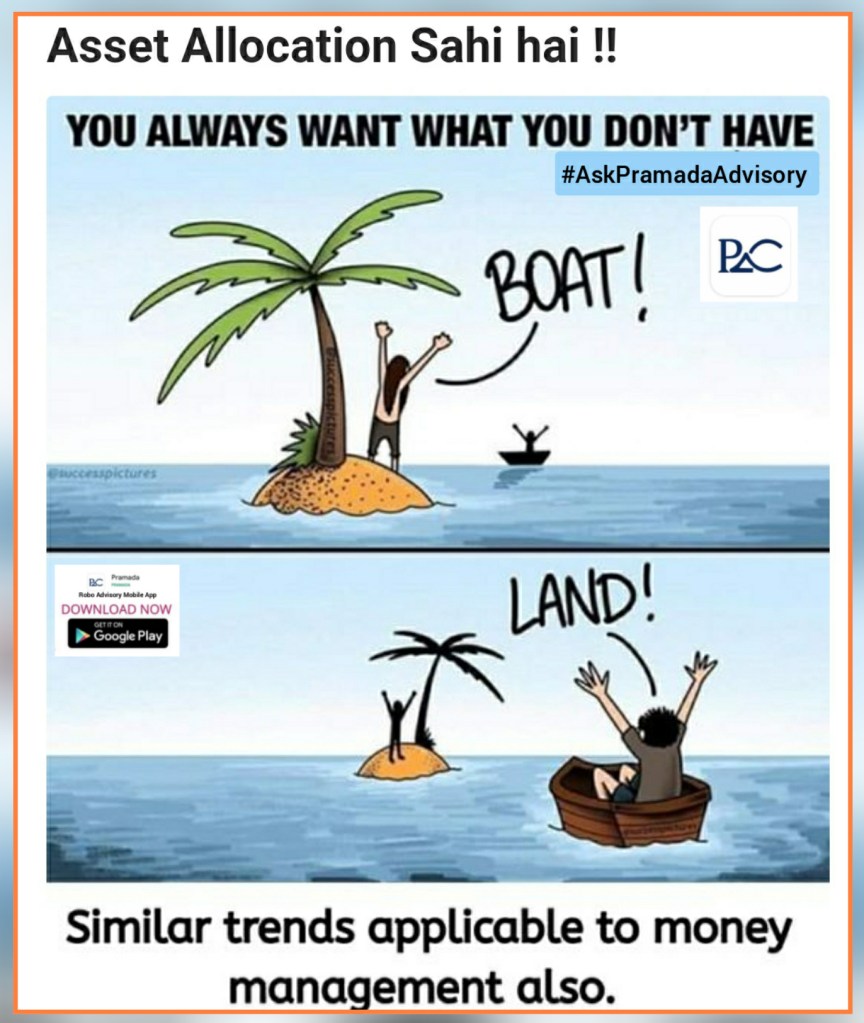
Asset Allocation Sahi Hai..

Human nature is very complex. We always find that others are in a better position than us. Nowadays lot many thoughts coming in investors mind such as

  • It would have been better if I have not bought a car from my savings
  • It would have been better if I would have invested in FD instead of Debt fundI
  • It would have been better if I book profits when the market was at high

Each decision has some impact which can be Positive or Negative. Each decision carries the opportunity cost too. We take decision based on factors prevailing at that time. Own your decisions, face the positive or negative outcomes, learn from mistakes, and keep going with that experience.

In Bull market we wanted equity and in Bear market we wanted debt. But truth is that , we need both for successful investment experience !

One should always follow a balanced and emotionless approach while investing. You should not get attached to any financial product when it is performing exponentially well neither you should completely offset it when it is at its downturn. Strike balance and invest in that product only if required.

Investing according to asset allocation in the different asset classes is important for long term investing. But just blindly following the asset allocation strategy without reviewing the financial products chosen for each asset class does not serve the purpose. Investing according to the chosen asset class is important for long term investing but among asset class, you can definitely change the product if it is not performing as per the expectation.

#AssetAllocationSahiHai

https://bit.ly/Pramada-Advisory

Diversification has its limits too…

In the name of diversification you might have invested across mutual fund categories and even in stocks.

Recently one of my friend showed his portfolio where he had
invested in 26 stocks and an equal number of mutual funds.

Every time he has invested by himself by directly buying through
his demat account. In one category itself he has invested in 5
different mutual fund houses.

In Stocks too, he has bought fewer shares in each companies.
After he has bought shares had gone down and he had stopped
buying in stock market itself.

Ideal way of investing in stock market is to buy 10-15 stocks at the
maximum. So that you can also keep monitoring the progress. If
you want to make profit, then buy another new share.

Even in mutual fund, invest in one mutual fund per category. If you
find the performance is not good, then sell it off and buy a new one.

In case you need personalised investment advise on which particular funds or any investment options to choose, you can drop an email or whatsApp to me

https://bit.ly/Pramada-Advisory

Latest Stamp Duty on Mutual funds in India

A quick Q&A thread about the latest Stamp Duty on Mutual Funds in India !!

From 1st July 2020, Stamp Duty will be applicable on MFs

First How much?

For all Purchases in MFs, you will pay stamp duty of 0.005% , i.e. Rs. 5 for every Rs. 1 lac invested

Q: When you say I have to pay stamp duty, how will I pay?

Ans: When you purchase a MF, Stamp Duty will auto-deducted and paid to govt. You don’t have to do anything.

For eg: if you invest 1 lac in any MF, the RTA (CAMs or Karvy) will deduct Rs. 5 (0.005%) as Stamp Duty from this

Q: When I sell MFs, will stamp duty be applicable?

Ans: No. Only when you purchase MFs,

Q: Is it applicable on my existing MFs also?

Ans: No, it is only on fresh purchases from today. Existing units, no impact !!

Q: On SIPs?

Ans: Yes on SIPs too

Q: On STPs?

Ans: Yes

Q: My SIP started 2 years back, so will I still pay Stamp Duty

Ans: Yes, for all buy transactions from today. SIP is a purchase. So, for your SIP instalments from today – irrespective if you started SIP before – Stamp Duty will be levied

Q: So should I stop SIP?

Ans: Of course Not, the amount is too miniscule to significantly impact your long term goals !!

Q: For STP – Explain in detail

Ans: For eg: First say I put 1 lac in liquid fund and from their shift 10k every week to equity fund

First stamp duty will be charged on 1 lac

Then everytime 10k shifts to equity – since it is purchase of equity fund – you pay again stamp duty

Q: For Switches?

Ans: Same rule applies. Everytime u switch, it is considered as a buy in the Switch-in scheme

Q: Isn’t this double Stamp Duty?

Ans: No. Switch or STP is just a simple mechanism to help transactions. It is a sell and buy

Q: But is it only for Demat mutual Funds?

Ans: Stamp Duty is for both kinds of units – Demat units also and normal account statement units also.

Q: I buy DIRECT mutual funds? For me, will I pay stamp duty

Ans: Yes, even if u buy DIRECT MFs

Q: I buy on Fund House website, Will I pay Stamp Duty?

Ans: Doesn’t matter where you buy from, Stamp Duty is applicable

Q: But I don’t buy on Stock Exchange, will I still pay Stamp Duty

Ans: YESSSS! Pls understand from where ever you buy MFs, you will pay it

Q: So will Stamp Duty reduce my returns?

Ans: You pay 0.005% as Stamp Duty. That is a negligible amount. If you are a long term investor – there is no significant impact. Don’t worry.

Q: Which types of MFs – Debt also or only Equity MFs?

Ans: On all kinds of MFs

Q: So for liquid funds, overnight funds also ?

Ans: Yes all kinds of MFs

Q: For ETFs?

Ans: Yes on ETFs also

Q: FMPs, Close Ended Funds?

Ans: Yes

Q: Can u pls give example?

Ans: Let’s say you invest, Rs. 1 lacs in a fund with NAV of Rs. 20

Earlier you would have got 5000 units (1 lac/20)

Now you will get 4999.750 units. ( 1 lac – Rs. 5)/20

So it marginal impact

Q: If I invest 1 lac, I will now get units for 99,995

For purposes of tax calculation i.e. LTCG or STCG what will be my cost of acquistion?

Ans: No Change

Earlier: Cost 1 lac

Now: Cost 1 lac (Stamp Duty is considered and included as your cost of acquisition)

Hope it helps. For more details or answers, you can follow my profile and message me!

Happy Investing!!

https://bit.ly/Pramada-Advisory

निवेश मंत्र

कई बार हमें लगता है कि हमने निवेश का एक बहुत बड़ा अवसर खो दिया है. ऐसा मुख्यतः तब होता है जब किसी एक विशेष निवेश से बहुत कम समय में बहुत अधिक प्रतिफल मिल रहा होता है. उस समय ऐसे विचार आते है कि काश मैने भी थोड़े पैसे शेयरों, जमीन या सोने में लगा दिये होते तो आज मुझे भी काफी अच्छा मुनाफा हो रहा होता. इस तरह के विचार एक सामान्य प्रक्रिया है और लगभग सभी के साथ होती है.

निवेशक जो निवेश कि प्रकृति समझते है. उन्हें अपने निवेश के जोखिम, अपेक्षित प्रतिफल तथा निवेश-समय कि समुचित जानकारी है. उनके अपने उद्देश्य या लक्ष्य है, एक निश्चित समय सीमा व् जोखिम लेने के स्तर निर्धारित है. उनके निवेश के निर्णय इन्ही तीन बातों पर आधारित होते है. उन्हें बाज़ार में मूल्यों में हो रहे उतार चडाव से बहुत प्रभाव नहीं पड़ता.

प्रत्येक निवेश की अपनी कुछ विशेषताए होती है. जैसे यदि आप दीर्घकाल(5 वर्ष या उससे अधिक) के लिए निवेश करना चाहते हो तो आप शेयरों या म्युचुअल फंड में निवेश कर सकते हो. यदि आपके निवेश की अवधि अल्प समय (2 वर्ष या इससे कम समय) के लिये है तो आपका निवेश ऋणों में जैसे कि बैंक में जमा, ऋण पत्रों पर आधारित म्यूचुअल फंड, कंपनी डिपोजिट इत्यादि में होना चाहिए. और यदि आपका निवेश 2 से 5 वर्षो के लिये है तो इन दोनों का संतुलित निवेश शुभस्कर होगा. स्वर्ण में निवेश दीर्घकाल में आपको मुद्रास्फीति के विरूद्व सुरक्षा प्रदान करता है. किन्तु अल्पावधि में इसके प्रतिफल में काफी अंतर हो सकता है जोकि मांग व आपूर्ति के नियम से प्रभावित होगा.

प्रोपर्टी में निवेश एक स्थानीय विषय ज्यादा है. जिन स्थानों पर कुछ विशेष परियोजनाओ के आने की सम्भावना होती है और जिसकी वजह से वहां बहुत सी नौकरियों, रोजगारों व उद्योगों के अवसर पैदा होने हो और इसमें भी महत्वपूर्ण बात इन सब के लिये मानवीय संसाधनों कि जरूरत स्थानीय आपूर्ति से संभव न हो तथा उसके लिये बड़े पैमाने पर आपूर्ति बाहर से होनी हो, ऐसे स्थानों पर प्रोपर्टी के मूल्यों में तीव्र वृद्धि की सम्भावना अधिक होती है. अन्यथा दीर्घावधि में प्रोपर्टी के मूल्यों में बहुत अधिक वृद्धि कि सम्भावना कम होती है. इसमें तरलता कि कमी भी इसे अन्य निवेश के मुकाबले कुछ कम आकर्षक बनाती है.

कब, कहाँ और कितना निवेश करना चाहिये, यह आपके वित्तीय उद्देश्यों (goals), जोखिम उठाने की क्षमता व उद्देश्य प्राप्ति की अवधि (time horizon) पर निर्भर करता है. इसमें पूंजी वितरण (asset allocation), जोखिम क्षमता (risk appetite), बीमा सुरक्षा (risk cover), पोर्टफोलियो विविधता (diversification), पोर्टफोलियो निर्जोखिमिकरण (derisking), पोर्टफोलियो पुनर्निर्धारण (rebalancing) इत्यादि धारणाओ का बहुत प्रभाव रहता है. जो निवेशक इन धारणाओ में पारंगत है उन्हें अपने निवेश के निर्णय स्वयं लेने चाहिये, अन्यथा आपको किसी वित्तीय योजनाकार (financial planner) से सलाह अवश्य करनी चाहिये.

एक महत्वपूर्ण बात समझाने की यह है कि आपके वित्तीय योजनाकार की भूमिका आपके फॅमिली डॉक्टर की तरह होती है. जिस प्रकार कालांतर में आप बहुत सी दवाइयों के विषय में जान जाते है, फिर भी उन्हें लेने से पहले आप एक बार डॉक्टर से सलाह अवश्य करते है. उसी प्रकार अपने निवेश बाबत निर्णय लेने से पहले एक बार अपने वित्तीय योजनाकार से मशविरा अवश्य करना चाहिये.

यदि आपका टैक्स प्लानिंग, इनवेस्टमेंट या बीमा संभंधित कोई भी प्रश्न है, तो आप हमें pramadaadvisory@gmail.com पर मेल कर सकते है या फिर हमसे निम्न फोन के माध्यम से भी सम्पर्क कर सकते है: 9431385172 ; 9835360269

https://bit.ly/Pramada-Advisory